 D-Time
Upcoming: October 17, 2026
Durga Puja
00
Days
00
Hours
00
Mins
00
Secs
📜 History & Origin
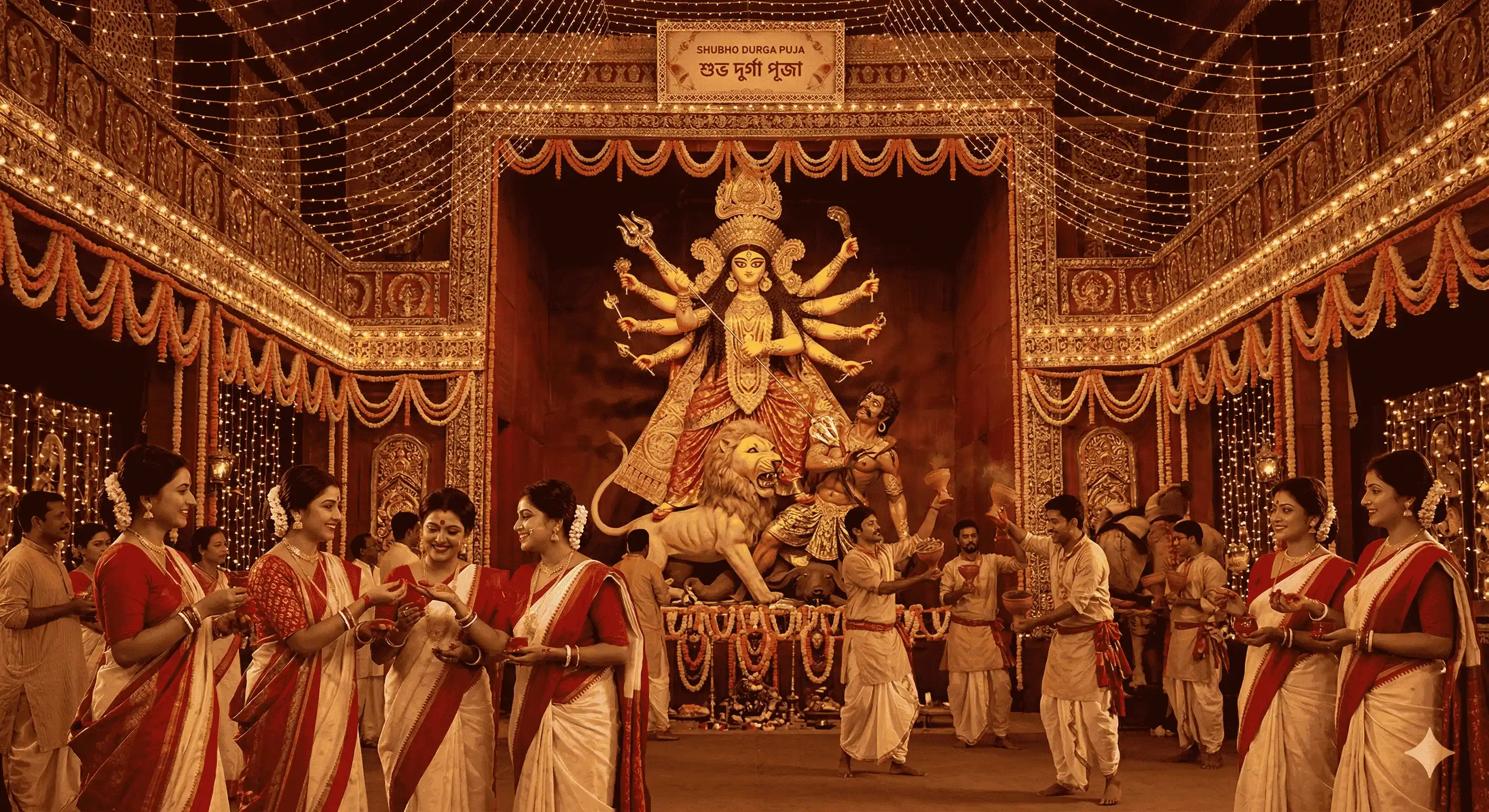
The history of Durga Puja is rooted in the fierce battle between Goddess Durga and the shape-shifting buffalo demon, Mahishasura. According to Hindu mythology, Mahishasura had obtained a boon from Lord Brahma that no man or god could defeat him. Drunk on power, he unleashed terror across the heavens and earth. Desperate, the Holy Trinity (Brahma, Vishnu, and Shiva) combined their divine energies to create Goddess Durga—a supreme, multi-limbed warrior goddess (Shakti) riding a lion.
Armed with weapons given by all the gods, Durga fought Mahishasura for nine days and nights. On the tenth day (Dashami), she pierced him with her trident, ending his reign of terror. Thus, she is revered as "Mahishasura Mardini" (The Slayer of Mahishasura).
Armed with weapons given by all the gods, Durga fought Mahishasura for nine days and nights. On the tenth day (Dashami), she pierced him with her trident, ending his reign of terror. Thus, she is revered as "Mahishasura Mardini" (The Slayer of Mahishasura).
✨ Significance
Durga Puja primarily symbolizes the victory of Good over Evil and the triumph of Dharma over Adharma. It is also a massive celebration of supreme female power, or "Nari Shakti." In states like West Bengal, Assam, and Odisha, it is deeply emotional, celebrated as the annual homecoming of Uma (Goddess Durga) from her husband Lord Shiva's abode in Mount Kailash to her maternal home, bringing her four children—Ganesha, Kartikeya, Lakshmi, and Saraswati—along with her.
🎉 How it is Celebrated
The festival spans the last five days of Navaratri: Shashthi, Saptami, Ashtami, Navami, and Dashami. The celebrations are characterized by the construction of massive, elaborately themed temporary structures called "Pandals," which house beautifully crafted clay idols of the Goddess.
Cities come alive with bright lights, vibrant decorations, and the continuous, rhythmic beating of the traditional "Dhak" (drums). Millions of people take to the streets in their finest new clothes for "Pandal Hopping," visiting different neighborhoods to admire the art, offer prayers, and enjoy street food.
Cities come alive with bright lights, vibrant decorations, and the continuous, rhythmic beating of the traditional "Dhak" (drums). Millions of people take to the streets in their finest new clothes for "Pandal Hopping," visiting different neighborhoods to admire the art, offer prayers, and enjoy street food.
🥥 Traditions
Durga Puja is defined by several unique traditions. Dhunuchi Naach is a devotional dance performed in front of the Goddess using clay incense burners filled with burning coconut husks and camphor. Pushpanjali is the offering of flowers while chanting mantras, especially on Ashtami. The festival concludes on Dashami with Sindoor Khela, an emotional ritual where married women smear vermilion (sindoor) on the Goddess and each other before the idols are taken in grand processions for Visarjan (immersion) in the river.
🕉️ Puja Vidhi
1. Bodhon (Shashthi): The unveiling of the Goddess's face and invoking her presence into the idol.
2. Navapatrika (Saptami): Tying together nine specific plants representing the nine forms of the Goddess, bathing them, and establishing them beside Lord Ganesha.
3. Kumari Puja (Ashtami): Worshiping a young, pre-pubescent girl as the living manifestation of the divine mother.
4. Sandhi Puja: Performed at the exact juncture of Ashtami and Navami, offering 108 lotuses and lighting 108 earthen lamps.
5. Visarjan (Dashami): The tearful farewell and immersion of the idols into water bodies.
2. Navapatrika (Saptami): Tying together nine specific plants representing the nine forms of the Goddess, bathing them, and establishing them beside Lord Ganesha.
3. Kumari Puja (Ashtami): Worshiping a young, pre-pubescent girl as the living manifestation of the divine mother.
4. Sandhi Puja: Performed at the exact juncture of Ashtami and Navami, offering 108 lotuses and lighting 108 earthen lamps.
5. Visarjan (Dashami): The tearful farewell and immersion of the idols into water bodies.
💡 Celebration Ideas
1. Pandal Hopping: Gather your friends and family, dress in traditional attire, and spend the evening visiting various community pandals to admire the incredible craftsmanship.
2. Community Bhog: Volunteer or participate in serving "Bhog" (the blessed food, usually consisting of Khichdi, mixed vegetables, and Payesh) to visitors.
3. Cultural Nights: Organize or participate in neighborhood cultural programs featuring singing, recitation, and traditional Bengali dances.
2. Community Bhog: Volunteer or participate in serving "Bhog" (the blessed food, usually consisting of Khichdi, mixed vegetables, and Payesh) to visitors.
3. Cultural Nights: Organize or participate in neighborhood cultural programs featuring singing, recitation, and traditional Bengali dances.
💌 Best Wishes
1. May Goddess Durga destroy all the evil around you and fill your life with prosperity and happiness. Shubho Sharadiya!
2. Let the festive spirit embrace you and your loved ones on this special occasion. Wishing you a joyous and blessed Durga Puja.
3. May the divine blessings of Maa Durga bring you immense strength, courage, and success in all your endeavors.
2. Let the festive spirit embrace you and your loved ones on this special occasion. Wishing you a joyous and blessed Durga Puja.
3. May the divine blessings of Maa Durga bring you immense strength, courage, and success in all your endeavors.
💬 Quotes
“The Goddess of power and strength is here to destroy the evil and bless her devotees. Shubho Mahalaya and Durga Puja!”
“She is the fierce warrior, the loving mother, and the ultimate protector. Surrender to her grace.”
❓ Frequently Asked Questions
Q: When is Durga Puja celebrated?
A: It is celebrated in the Hindu calendar month of Ashwin, which typically corresponds to September or October in the Gregorian calendar.
Q: What is Sandhi Puja?
A: Sandhi Puja is the most auspicious phase of Durga Puja, lasting 48 minutes at the exact transition point between Ashtami (the 8th day) and Navami (the 9th day). It commemorates the moment Durga took the form of Chamunda to kill the demons Chanda and Munda.
Q: Why are the idols immersed in water?
A: Visarjan (immersion) symbolizes the return of Goddess Durga to her heavenly abode in Mount Kailash after her earthly visit, reuniting with Lord Shiva. It represents the cycle of creation and dissolution.
A: It is celebrated in the Hindu calendar month of Ashwin, which typically corresponds to September or October in the Gregorian calendar.
Q: What is Sandhi Puja?
A: Sandhi Puja is the most auspicious phase of Durga Puja, lasting 48 minutes at the exact transition point between Ashtami (the 8th day) and Navami (the 9th day). It commemorates the moment Durga took the form of Chamunda to kill the demons Chanda and Munda.
Q: Why are the idols immersed in water?
A: Visarjan (immersion) symbolizes the return of Goddess Durga to her heavenly abode in Mount Kailash after her earthly visit, reuniting with Lord Shiva. It represents the cycle of creation and dissolution.
ℹ️ More Information
General festive content